
Chrysler Tire Service Guide for Paramus Drivers
Your tires are the only part of your Chrysler that touches the road. So, they have a bigger job than most drivers give them credit for.
You know how a "quick stop” in Paramus somehow turns into
Route 17 traffic, a pothole, and one too-tight parking turn at Garden State
Plaza? That’s a normal day around here. And it’s also why your tires wear out
faster than most drivers realize.
Here’s the catch. Tire problems rarely start with a
dramatic flat. They start small, with a little vibration, a slight steering
drift, or road noise you brush off. Easy to ignore until they aren’t.
Funny enough, drivers will investigate one strange
dashboard sound immediately… but trust the same tires for 40,000 miles without
question. That wear adds up quietly, especially with stop-and-go traffic, rough
pavement, and New Jersey weather doing what it does.
That’s why Chrysler maintenance isn’t just about replacing worn tires. It’s about catching issues early, protecting handling, and avoiding bigger headaches later. If you’ve ever searched Chrysler tire service near me after a brutal pothole hit and wondered if something got knocked out of alignment, you’re not overthinking it.

In this blog, we’ll cover warning signs to watch for, when a change may be needed, and what smart CDJR maintenance looks like for Paramus drivers.
How Often Should You Schedule Chrysler Tire
Service?
Tire care doesn’t have to be
complicated. A simple routine usually does the heavy lifting and can help your
tire setup last longer.
A practical schedule interval you can refer to:
|
Service Interval
|
What to Do
|
Why It Matters
|
|
Monthly
|
Check tire pressure
|
Helps support even wear, handling,
and fuel efficiency, especially during New Jersey temperature swings
|
|
Every 5,000–7,500 Miles
|
Rotate tires
|
A key part of the service that helps
prevent uneven wear and may extend life
|
|
Periodically
|
Inspect alignment and tread
|
Can catch wear issues early,
especially after potholes or rough road impacts
|
Regular inspections can help you avoid needing a tire
change earlier than expected. Because routine service usually costs a lot less
than replacing it too soon.
And that’s the kind of math we like.
How Do You Know Your Chrysler Tires Need
Attention?
Here’s something many drivers underestimate: tires don’t
just wear from mileage; they wear from everyday driving. In Paramus, everyday
driving can be surprisingly hard on your tires.
Chrysler tire service is about more than maintenance.
It’s preventive care. Often, your ride gives you warning signs before a bigger
problem shows up.
Watch for These Common Signs
·
Steering Pull: If your
vehicle drifts slightly left or right, it may point to alignment issues rather
than just normal wear.
·
Vibration at Highway Speeds: A steering
wheel shake or vibration could signal balancing problems or uneven wear.
·
Uneven Tread Wear: If one side is
wearing faster than the other, something deeper, like alignment or suspension,
may need attention.
·
More Road Noise Than Usual: Tires often
get louder as tread wears down, even before drivers notice visible problems.
·
Low Tread Depth: Worn tread can
affect grip, especially in wet New Jersey conditions.
·
Sidewall Cracks or Damage: Small cracks,
bulges, or impact damage should never be ignored.
None of these automatically means you need a new tire.
But they do mean it’s worth paying attention. And that’s where routine service
can make a difference. Catching small issues early, helping tires last longer,
and often preventing much bigger repair bills later.
Seasonal Tips for Paramus Drivers
New Jersey weather doesn’t treat tires gently, and each
season puts different demands on them. That’s why seasonal service can help
catch wear early and keep them performing the way they should.
What to Check Each Season
|
Season
|
What to Watch For
|
Why It Matters
|
|
Spring & Summer
|
Alignment, tire pressure, and tread
condition
|
Winter potholes can affect alignment, while
warmer temperatures and road trips can speed up wear
|
|
Fall & Winter
|
Tread depth, pressure, and traction
readiness
|
Cold weather affects pressure, and worn
tires can struggle more on wet or slick roads
|
Spring is often a good time to undo what winter did. Fall
and winter are when tread really earns its keep. A seasonal inspection may seem
small, but it can help spot issues before they lead to an early replacement.
And around New Jersey, where road conditions can change faster than the
forecast, that’s a pretty smart habit.
How to Change a Chrysler Tire Yourself (If
You’re Stuck)
Flat tire? It happens. If you need to handle a quick
Chrysler tire change by yourself, here’s the short version.
Let’s see how you can DIY:
1. Pull Over Somewhere Safe: Get off the
road, turn on hazard lights, and engage the parking brake. Safety first,
always.
2. Grab the Spare and Jack: Most Chrysler
models have a spare, jack, and lug wrench in the trunk cargo area.
3. Loosen the Lug Nuts: Before lifting
the car, loosen the lug nuts slightly. Key word: loosen, not remove.
4. Jack Up the Vehicle: Use the proper
jack point in your owner’s manual. (Guessing here is…not recommended.)
5. Swap: Remove the flat, mount the spare, and
hand-tighten the lug nuts.
6. Lower the Car and Tighten Fully: Lower the
vehicle, then tighten the lug nuts in a star pattern.
7. Don’t Treat the Spare Like a Long-Term Relationship: Temporary
spares are exactly that—temporary.
If there’s sidewall damage, repeated pressure loss,
uneven wear, or you suspect you need more than a simple tire
replacement, it may be time for a professional check. Most of the time, a flat
tire is bad luck. However, sometimes it’s a warning to get a professional
service.
Why Professional CDJR Service Can Help
Sometimes what seems like a tire issue is really
alignment trouble, suspension wear, or uneven tread telling a bigger story.
That’s where professional CDJR maintenance service can help.
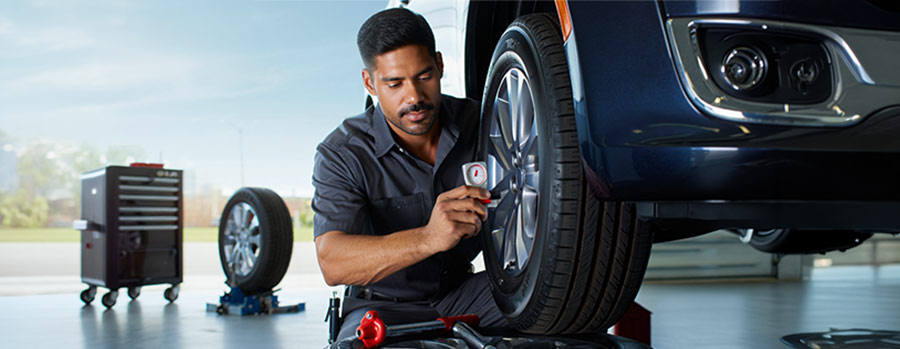
At CDJR of Paramus, tire service goes beyond a basic
inspection. The team can help evaluate the condition, check for wear patterns,
recommend Mopar tire options when appropriate, and help determine whether you
need routine maintenance or a full change.
A professional service visit may help with:
·
Identifying alignment or balance issues early
·
Inspecting tread wear and condition
·
Recommending the right service or replacement
options
·
Helping protect tire life through proper
maintenance
·
Supporting Chrysler-specific care with
factory-trained expertise
It’s about understanding what your tires are telling you
and addressing the cause, not just the symptom. Because when it comes to tires,
guessing usually isn’t the best long-term strategy.
Don’t Wait Until a Problem Picks the Worst
Possible Moment
Tire care is usually less about reacting to problems and
more about staying ahead of them. A little consistency in pressure checks,
rotations, and seasonal inspections can go a long way in helping your Chrysler
tire setup last longer and perform better.
Often, it’s the small things caught early that help avoid
the expensive things later. So if your steering feels a little off, your tread
looks questionable, or you’ve been meaning to schedule tire service "soon,”
this may be your sign not to keep pushing it off. At CDJR of Paramus, the team
can help with inspections, recommendations, and trusted CDJR service tailored
to your vehicle.
Discovering an issue in Route 17 traffic during a
rainstorm? That’s a terrible time for a diagnosis. Better to handle it before
they start making scheduling decisions for you.
Schedule a visit with CDJR of Paramus for Chrysler
Tire Service. Because the only thing your next drive should be carrying is
groceries, not avoidable tire drama.
