
CDJR of Paramus Service
- HOME
- SERVICE
- QUICKLANE SERVICE
- EXCLUSIVE OFFER
- FINANCE
- QUICK SERVICES
- SPECIAL OFFERS
- BLOG
- ABOUT US
- 1001 Lancaster Avenue Reading, PA 19607
-
CDJR of Paramus ServiceReviewsAddress315 Rt 4 West
Paramus NJ 07652
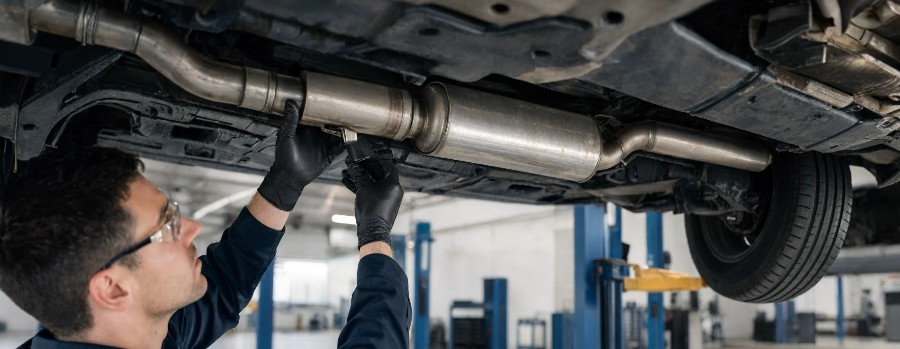
Your vehicle’s exhaust system is not exactly the star of the show. You probably think more about your Jeep’s capability, your Ram’s towing strength, or the smooth ride of your Chrysler than what is happening underneath the vehicle.
And that is perfectly normal.
The exhaust system works quietly in the
background, routing gases away from the engine and cabin, reducing noise, and
helping manage emissions. But when something goes wrong, it usually finds a way
to get your attention.
Sometimes it is a sudden roar. Sometimes
it is a strange rattle. Sometimes your vehicle simply does not feel like
itself.
For drivers in Paramus, those warning
signs can be easy to overlook. Between stop-and-go traffic on Route 17, busy
stretches of Route 4, and regular trips around Bergen County, your vehicle gets
plenty of opportunities to tell you something needs attention.
Here are six signs that your Jeep,
Chrysler, Dodge, or Ram may need exhaust system service.
You know what your vehicle normally
sounds like. So when your Jeep suddenly develops a deeper rumble or your Ram
gets noticeably louder under acceleration, pay attention.
A louder-than-usual exhaust can point to
a leak, damaged muffler, cracked pipe, failed gasket, or another exhaust
component that is no longer doing its job.
Listen for:
·
A deep or unusually loud
rumble
·
Hissing during
acceleration
·
Roaring or popping sounds
·
A noticeable change in
exhaust tone
The location and timing of the noise can
provide useful clues, but the source is not always obvious from the driver's
seat.
The takeaway: A
louder exhaust does not automatically mean you need a new muffler. An
inspection can pinpoint the problem before you start replacing parts
unnecessarily.
A metallic rattle underneath your vehicle
is another sound worth investigating.
If it happens when you start the engine,
accelerate, idle, or drive over bumps, a loose heat shield, bracket, pipe, or
other exhaust component could be responsible.
Exhaust systems contain several parts
that are exposed to heat, road debris, moisture, and everyday wear. Over time,
hardware can loosen or components can become damaged.
And Paramus roads do not exactly give
your undercarriage a spa day.
If the rattle is persistent or getting
louder, have it checked rather than waiting for the noise to solve itself.
Spoiler alert: it probably will not.
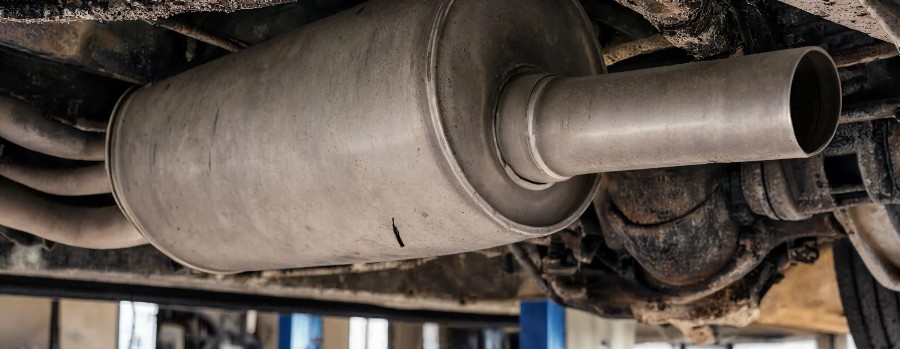
Your vehicle's exhaust gases belong
outside the vehicle. If you begin noticing exhaust odors inside the cabin, take
them seriously.
An exhaust leak can allow gases to escape
before they are properly routed away from the vehicle. You may notice an
unusual smell while idling, sitting at a stoplight, or driving in slow-moving
traffic.
This is particularly important for
Paramus drivers who regularly spend time in congested traffic. If you smell
exhaust inside the cabin, do not simply turn up the radio and hope it
disappears.
Have the vehicle inspected promptly.
If your Jeep, Dodge, or Ram suddenly
feels less responsive, struggles to accelerate, or seems to have lost some of
its usual pep, an exhaust problem could be one possible cause.
A damaged or restricted exhaust system
can affect how efficiently exhaust gases leave the engine, potentially
affecting performance.
However, sluggish acceleration is not an
exhaust diagnosis. Engine, fuel, ignition, transmission, or sensor problems can
produce similar symptoms.
That is why diagnostics matter. Rather
than playing automotive detective in your driveway, let a trained technician
determine what is actually causing the change.
For anyone trying to merge onto Route 17,
a vehicle that suddenly feels reluctant to move is definitely worth
investigating.
Few dashboard lights get a driver's
attention faster than the check engine light.
While it can signal many different
problems, exhaust and emissions-related components can be among them. Modern
Jeep, Chrysler, Dodge, and Ram vehicles use sensors and emissions-control
systems to monitor engine and exhaust performance.
So when that little orange light appears,
resist the urge to assume the worst—or guess at the repair.
A check engine light could indicate an
emissions component, sensor, engine issue, fuel-system problem, or another
fault. The right diagnostic scan can help identify the cause.
And if the light is flashing or
accompanied by serious drivability problems, do not put off service.
Nobody likes watching the fuel gauge move
faster than expected.
A sudden drop in fuel economy can have
many causes, from tire pressure and driving habits to engine, sensor,
emissions, or exhaust-related problems.
One unusually expensive trip to the gas
station does not necessarily mean your exhaust system is failing. But if poor
fuel economy appears alongside other warning signs—such as unusual noises, a
check engine light, or reduced performance—it is worth having the vehicle
evaluated.
Think of it as your vehicle connecting
the dots for you.
An exhaust issue may start with something
as minor-seeming as a rattle or louder-than-usual sound. But putting off an
inspection can allow a damaged component to worsen or leave a related engine or
emissions problem undiagnosed.
The biggest red flag is exhaust fumes
inside the cabin. Because the exhaust system is designed to route combustion
gases away from the passenger compartment, that symptom deserves prompt
attention.
In short, if your vehicle sounds
different, smells different, or drives differently, it is worth finding out
why.
For Jeep, Chrysler, Dodge, and Ram owners
around Paramus and Bergen County, paying attention to small changes can help
you catch potential exhaust problems before they become bigger headaches.
Whether you drive a Jeep for weekend
adventures, a Ram for work, a Dodge for everyday driving, or a Chrysler for
family trips, unusual sounds, smells, dashboard warnings, and performance
changes are all worth investigating.
At Paramus CDJR, our service team
works with Jeep, Chrysler, Dodge, and Ram vehicles and can help diagnose
exhaust-related concerns and other vehicle issues.
So if your vehicle has started sounding
less like its usual self and more like it is auditioning for a very different
kind of commute, it may be time to schedule service.
Because your Jeep, Dodge, Chrysler, or
Ram already has enough to deal with on Route 17.
It does not need to write its own soundtrack, too.
