
Dodge Oil Change Service & Intervals: What Paramus Drivers Need to Know
Ever looked at your oil change reminder and thought, "It can probably wait another week”?
That’s
usually how it starts. It never starts with a dramatic, movie-style explosion
of smoke on the side of Route 17. Instead, it’s way more subtle. You push an
appointment back a week. You run a few extra errands. You survive another
brutal crawl through Bergen County traffic. Maybe you pack the family into the
car for a long weekend, somehow cramming more bags into the trunk than the laws
of physics should actually allow.
Modern Dodge
vehicles are tough, and they’re built to take a beating. But your engine oil is
fighting a losing battle against freezing North Jersey winters, summer heat
radiating off the Garden State Plaza parking lot, and the endless stop-and-go
chaos of Paramus. Your oil wears out long before your car lets on with all this
chaos. Your car might drive perfectly fine while heat, friction, and moisture
are quietly cooking your oil. But whether you’re just trying to survive the
daily commute or you're tearing up the highway in a high-performance Dodge
Charger or Challenger, ignoring it is a gamble you don't want to take.

At CDJR of
Paramus, our service team sees the aftermath of delayed Dodge
maintenance every single day. So, let’s talk about what’s actually going on under
your hood. In this guide, we’re breaking down the real Dodge oil change
intervals, the red flags you should never ignore, and why a quick trip to the
shop now will save you from a massive, wallet-crunching repair bill later.
Engine Oil Matters More Than Most Drivers
Think
Most drivers
think oil just "lubricates things," but that’s like saying a
smartphone "makes phone calls." It barely scratches the surface.
In reality,
your oil is acting as a bodyguard, a cooling system, and a cleaning crew all at
once. But eventually, it gets overwhelmed by gunk and moisture, losing its
superpowers. And if you’re driving in North Jersey, that breakdown happens in
fast-forward. Short errands around Paramus don’t let your engine get hot enough
to burn off internal condensation. Freezing winter cold starts leave your
engine temporarily unprotected. And the traffic? It creates heat that cooks
your oil faster than you’d think.
If you’re
driving a high-performance vehicle, the stakes are even higher, making your oil
work a double shift. In short, your oil does way more than just lubricate.
Which brings
us to the next question: How often do you need a Dodge oil change?
What’s The Right Dodge Oil Change Interval
The answer
depends on three major factors. Your engine type, oil type, and your driving
habits. Most newer Dodge models using full synthetic oil can go between 7,500
and 10,000 miles under perfect driving conditions. However, real-world driving
isn't perfect. Many local vehicles benefit from earlier service, closer to
5,000 to 6,000 miles.
That shorter
window applies if your routine includes:
·
Short trips and quick errands
·
Heavy commuter traffic
·
Towing or aggressive acceleration
·
Extreme temperature swings
·
Long periods of idling
Drivers with
HEMI-powered models usually stick to that shorter range because performance
engines place massive demands on oil stability. And remember, mileage isn’t the
only factor. Oil degrades over time just by sitting. You should still schedule
an oil change at least once every 12 months, even if you haven't hit the
mileage limit.
While these
general rules apply anywhere, our specific local roads have a funny way of
accelerating that timeline.
Signs Your Dodge May Be Due for Oil Service
Oil
deterioration rarely announces itself dramatically. Most warning signs begin
subtly.
Some of the
most common indicators include:
·
Louder Engine Noise During Startup: If the engine sounds rougher, tick
louder, or feels less refined during cold starts, aging oil may not be
circulating efficiently.
·
Oil Change Warning Light: Modern Dodge vehicles use oil life monitoring systems
that track driving conditions and engine load to calculate service timing.
·
Dark or Dirty Oil: Fresh synthetic oil typically appears amber-colored. Older oil becomes
darker and may feel gritty over time.
·
Reduced Fuel Economy: Dirty oil increases internal resistance, forcing the engine to work
harder.
·
Burning Smells: A burnt oil smell inside or outside the cabin may point toward
overheated oil or leaks.
·
Sluggish Acceleration: Engines relying on degraded oil often lose smooth responsiveness
gradually rather than suddenly.
The
important thing to remember is that these symptoms usually develop
progressively. Many drivers adapt to them without realizing performance has
changed.
You need to
be prepared for uninvited emergencies. In such cases, you can change the oil
yourself.
Steps to Change Engine Oil For Dodge Vehicles
Yourself
If you love
a good driveway project, changing your own oil is a great way to bond with your
car. Just grab your tools, fresh synthetic oil, a new filter, and a drain pan
before you dive in.
Step 1: Park safely
Park on a
flat surface and pull that parking brake tight. If you're driving a low-profile
Charger or Challenger, you’ll need to elevate it using car ramps or a
heavy-duty jack with sturdy jack stands. Never crawl under a vehicle supported
only by a standard tire jack.
Step 2: Warm up the engine
Let the
engine idle for about five minutes, then shut it off. Warming up the engine
lowers the oil's viscosity, which helps the old fluid and any trapped
contaminants drain out much faster.
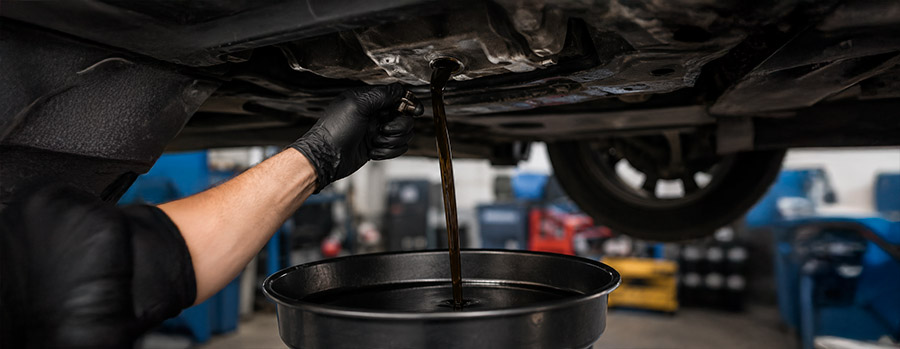
Step 3: Clean out the old oil
Locate the
oil pan drain plug underneath. Position your pan directly below it, remove the
plug with your wrench (usually 13mm), and let the old oil drain out. Once it
slows to a drip, clean the area and reinstall the plug tightly without
stripping the threads.
Step 4: Replace the oil filter
Locate the
oil filter (fair warning: it might be tucked into a frustratingly tight spot).
Use an oil filter wrench to spin it off. Before twisting the new filter on,
smear a dab of clean motor oil onto its rubber gasket to ensure a perfect seal.
Spin it on and hand-tighten it snugly.
Step 5: Refill with fresh oil
Pop the hood
and remove the oil fill cap. Grab a funnel to avoid messy spills and pour in
the exact amount of full synthetic oil your manual calls for. Put the cap back
on, run the engine for a minute to circulate the fluid, then check the dipstick
to confirm the level is perfect.
Step 6: Reset your oil life monitor
Time to let
your car's computer know the good news. Hit the ignition button to the
"ON/RUN" position without pressing the brake pedal. Use your steering
wheel arrows to navigate to 'Vehicle Info,' find the oil life tab, and hold
down the reset button until it hits 100%.
While taking
the DIY route is rewarding, wrestling with stubborn filters, getting covered in
grime, and hauling old oil to a recycling center isn't everyone's idea of a
perfect weekend. If you'd rather skip the cleanup and get back to cruising
Bergen County, there’s an easier way to get it done: Get it done by a
professional.
What’s Included in a Professional Oil
Change?
When you
pass the work to the pros, they aren't just getting a quick top-off. Your ride
is essentially getting a spa day
A
comprehensive service includes:
·
Complete drainage of the old engine oil.
·
Replacement with a genuine OEM oil filter.
·
Refilling with premium full synthetic oil.
·
Fluid top-offs for essential systems.
·
A multi-point inspection
Think of it
as preventive medicine for your engine, without any of the driveway cleanup.
Final Thoughts: Protect Your Engine
Oil changes
are easy to push down your to-do list because your car rarely complains right
away. But keeping that engine oil fresh is the single easiest way to protect
your vehicle's performance and long-term reliability. Whether your odometer is
giving you the signal, a seasonal shift is around the corner, or it's simply
been a while since your last visit, taking action now prevents a costly repair
bill later.
Before you
book your appointment, make sure to check our rotating service specials for
high-value Dodge oil change coupons that keep your maintenance costs down. When
you’re ready to give your engine the refresh it deserves, pull into the service
bay at CDJR of Paramus. Our state-of-the-art service center features certified
Mopar master technicians, specialized diagnostic equipment built for modern
Dodge powertrain systems, and a stock of genuine OEM fluids and filters
engineered specifically for your vehicle. We tailor our services to the exact
demands of real Bergen County driving conditions, ensuring your car is fully
ready for the road ahead.
Don't wait for a warning light to interrupt your commute. Visit CDJR of Paramus and keep your engine running like a champ.
