
Why Is Your Jeep Losing Power? 7 Common Causes to Know
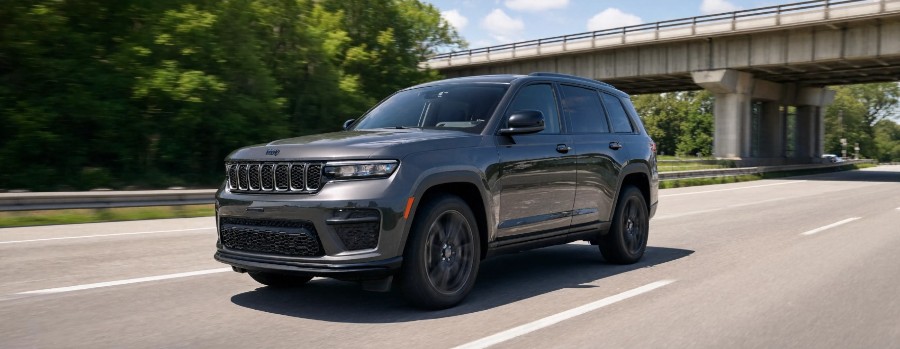
Your Jeep should respond when you press the accelerator, whether you are merging onto Route 4, navigating Route 17 traffic, or heading through Bergen County with passengers and gear. If your Wrangler, Grand Cherokee, Compass, or Gladiator suddenly feels slow, hesitant, or unwilling to build speed, it is worth paying attention.
At Chrysler Jeep Dodge of Paramus, we
understand that a loss of power can have several possible causes. Some issues
involve routine maintenance, while others may affect the fuel system, ignition,
transmission, exhaust, throttle, or engine electronics.
Understanding the warning signs can help
you decide when it is time to schedule professional Jeep engine diagnostics.
What Does It Mean When Your Jeep Loses Power?
Poor acceleration can feel different
depending on the Jeep model and the problem behind it. You may notice that your
vehicle takes longer to reach speed, hesitates when you press the accelerator,
or struggles more than usual while climbing a hill or merging onto Route 4 or
Route 17.
A Jeep that feels normal at a steady
speed may reveal a problem when the engine needs to produce more power. These
symptoms are clues, not a diagnosis, but they can help a technician determine
which systems need closer attention.
|
What you are experiencing
|
Possible causes
|
|
Sluggish
acceleration
|
Airflow, fuel,
ignition, or throttle concerns
|
|
Engine
hesitation
|
Sensor, fuel,
ignition, or electronic issues
|
|
Engine revs
without normal acceleration
|
Transmission
concerns
|
|
Power loss at
higher speeds
|
Fuel-delivery
or exhaust restriction
|
|
Rough running
with reduced power
|
Misfire or
ignition problem
|
|
Power loss with
a check engine light
|
Engine,
emissions, or sensor-related fault
|
If the loss of power is sudden, severe,
or accompanied by a flashing warning light, avoid driving farther than
necessary. A professional inspection can help identify the problem before it
creates a larger inconvenience or leaves you stranded.
1. Your Jeep May Not Be Getting Enough Air
Your Jeep’s engine needs the right
balance of air and fuel to operate efficiently. If airflow is restricted, the
engine may not respond as quickly when you press the accelerator.
One possible cause is a dirty or heavily
restricted engine air filter. Dirt and debris can limit the air reaching the
engine, which may lead to sluggish acceleration or reduced responsiveness. This
can be especially noticeable when your Jeep is working harder, such as when a
Wrangler is climbing a grade or a Gladiator is carrying a load through Bergen
County.
Common signs of an airflow problem may
include:
·
Sluggish acceleration
when merging onto Route 4 or the Garden State Parkway
·
Reduced throttle response
·
An engine that feels less
responsive than usual
·
Lower-than-usual fuel
economy in some situations
An air filter is relatively simple to
inspect, but replacing it may not solve the problem if another part of the
intake or engine-management system is involved. If your Jeep still feels weak
after routine maintenance, schedule diagnostics rather than guessing at the
repair.
2. A Fuel-System Problem Could Be Holding Your Jeep Back
Your engine needs a steady supply of fuel
at the correct pressure. A weak fuel pump, restricted filter where applicable,
injector concern, or fuel-pressure problem can interfere with acceleration.
Fuel-related performance problems may
become more obvious when your Jeep is under load. For example, your Gladiator
might cruise normally on local Paramus roads but hesitate while accelerating
onto Route 17. A Wrangler may also show a lack of power when carrying equipment
or traveling uphill.
You may notice:
·
Hesitation when
accelerating
·
Power loss under load
·
Difficulty maintaining
speed on an incline
·
Rough running or an
illuminated check engine light
These symptoms can overlap with ignition,
sensor, and transmission problems. Proper testing helps identify whether the
issue involves fuel pressure, fuel delivery, engine control, or another system.
3. Worn Spark Plugs Can Affect Acceleration
Your Jeep’s engine depends on precisely
timed combustion. If spark plugs or other ignition components are worn or
malfunctioning, the engine may misfire instead of producing smooth, consistent
power.
A misfire can feel like hesitation,
shaking, or a noticeable lack of acceleration. It may be more apparent when you
ask the engine to work harder, such as when merging into traffic near
Hackensack or accelerating with a Grand Cherokee full of passengers and cargo.
You might also notice:
·
Rough idling or shaking
while stopped
·
Reduced fuel economy
·
A check engine light
·
Jerking or hesitation
under acceleration
Following the maintenance schedule for
your specific Jeep model can help identify worn ignition components before they
affect drivability. If your vehicle is already running poorly, however,
replacing spark plugs without testing the underlying problem may not resolve
the issue.
4. An Engine Sensor May Be Sending Incorrect Information
Modern Jeep vehicles use sensors to
monitor engine operation and help the powertrain computer make real-time
adjustments. When a sensor or its circuit is not working correctly, the
information reaching the computer may be inaccurate.
Concerns involving components such as the
mass airflow sensor, throttle-position sensor, oxygen sensor, or other
engine-management inputs can contribute to hesitation, rough running, reduced
performance, or a check engine light.
A sensor-related issue may show up as:
·
Hesitation when you press
the accelerator
·
Rough running or reduced
engine performance
·
An illuminated check
engine light
·
Inconsistent response
from the throttle
A diagnostic trouble code can point
toward a system, but it does not always prove that the named component is the
root cause. Advanced diagnostic equipment and additional testing can help a
technician determine what is actually happening before parts are replaced.
5. The Exhaust System Could Be Restricting Performance
Your Jeep’s engine needs to breathe in
and breathe out. If the exhaust system becomes restricted, gases may not leave
the engine efficiently. A restricted catalytic converter is one possible cause
of serious power loss.
Exhaust-related performance problems may
become more noticeable as engine speed rises or when you ask the vehicle to
work harder. Your Jeep Grand Cherokee, Wrangler, or Compass may feel
increasingly sluggish during acceleration, especially on a grade or while
carrying additional weight.
Possible signs include:
·
Acceleration that worsens
as engine speed increases
·
More severe power loss
uphill
·
Reduced ability to
maintain highway speed
·
Unusual exhaust smells or
an engine warning light
Because exhaust concerns can have several
causes, inspection and testing are important before replacing an expensive
component. A professional diagnosis can help separate an exhaust restriction
from a fuel, ignition, or engine-control problem.
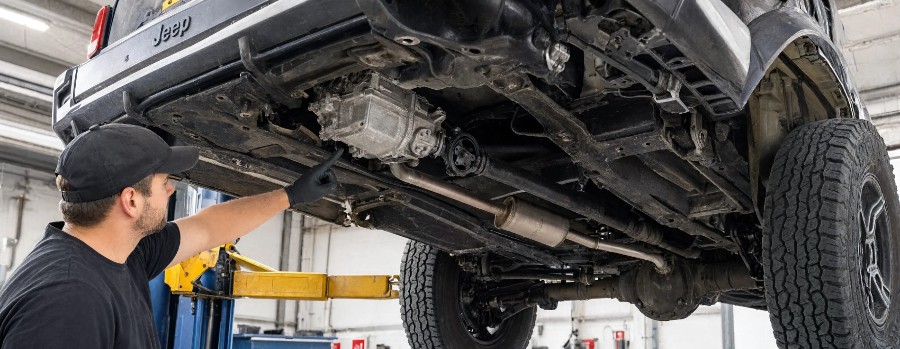
6. The Transmission May Be the Real Culprit
Not every acceleration problem starts
with the engine. Your Jeep’s transmission transfers engine power to the wheels,
so a slipping, delayed, or improperly shifting transmission can make the
vehicle feel slow even when the engine is running normally.
One helpful clue is what happens to the
engine RPM. Transmission-related acceleration concerns may involve:
·
RPM rising without a
matching increase in vehicle speed
·
Delayed, harsh, or
inconsistent gear changes
·
Shuddering during
acceleration
·
A noticeable delay before
the vehicle moves forward
If you press the accelerator and the engine revs higher but your Jeep does not accelerate proportionally, the transmission may need closer attention. That is different from an engine that struggles to build
RPM in the first place. Sharing exactly what you feel and hear with your service advisor can help narrow the diagnostic path.
7. Throttle Problems Can Cause Hesitation
The throttle system controls how much air
enters the engine and plays an important role in how your Jeep responds to the
accelerator. A dirty throttle body or an issue with the electronic throttle
system can create a delay or inconsistent response.
In some situations, the vehicle may limit
engine power after detecting a problem with the throttle or another critical
system. This may be accompanied by a warning message on the dashboard.
Possible warning signs include:
·
A noticeable delay after
pressing the accelerator
·
Uneven or inconsistent
throttle response
·
Sudden reduced power
·
A warning message or
check engine light
If your Jeep suddenly feels dramatically less responsive, do not assume the problem will correct itself. Have it professionally diagnosed, especially before a longer drive through Bergen County or a trip toward Fort Lee, Englewood, or northern New Jersey.
Getting to the Bottom of Jeep Engine Performance Problems
When your Jeep is not accelerating the
way it used to, there may be more than one possible cause. Restricted airflow,
worn ignition components, fuel-delivery concerns, sensors, throttle operation,
exhaust restrictions, and transmission problems can all create similar
symptoms.
Whether you drive a Jeep Wrangler, Grand
Cherokee, Compass, Gladiator, or another Jeep model, prompt attention to a loss
of power can help you get back to driving with confidence. If your Jeep is
hesitating, struggling under load, or showing a warning light, schedule Jeep
engine diagnostics with Chrysler Jeep Dodge of Paramus before a small
performance issue becomes a larger repair.
Ready to find out why your Jeep is losing power? Schedule service with Chrysler Jeep Dodge of Paramus.
