
What Your Steering Wheel Vibration Could Be Telling You
A smooth, steady steering wheel is easy to take for granted—until it suddenly isn't.
If your
Jeep, Ram, Dodge, or Chrysler starts vibrating through the steering wheel,
don't automatically assume the steering system itself is the problem. The
vibration could be connected to your tires, wheels, brakes, alignment,
suspension, or other components.
One of
the most useful clues is when the vibration happens.

Does it
appear at highway speeds? Only when you're braking? Does your vehicle shake
after hitting a pothole? Or does the steering wheel feel different almost all
the time?
The
pattern can help point toward the system that may need attention.
If
you're driving around Paramus, Ridgewood, Fair Lawn, or nearby Bergen County
communities, here's what different steering wheel vibration patterns could
mean.
Start With When the Vibration Happens
Not
every steering wheel vibration feels the same, and the circumstances
surrounding it can provide useful information.
|
When You Notice the Vibration
|
What Could Be Involved
|
|
At
certain speeds
|
Tire
or wheel balance, tire condition
|
|
While
braking
|
Brake
rotors, pads, calipers, or related components
|
|
Over
bumps
|
Suspension
or steering components
|
|
During
acceleration
|
Axles,
drivetrain, or related components
|
|
At
most speeds
|
Tires,
wheels, alignment, suspension, or steering
|
|
Along
with uneven tire wear
|
Alignment,
suspension, or tire concerns
|
These
patterns aren't a diagnosis by themselves. A proper inspection is needed to
determine the actual cause, but knowing when the vibration occurs can help
narrow down where to look.
Vibration at Certain Speeds? Check the Tires
and Wheels
If your
steering wheel feels smooth at lower speeds but starts vibrating as you
accelerate, the tire and wheel assemblies are a logical place to start.
A wheel
that's out of balance can create vibration as it rotates. The sensation may
become more noticeable within a particular speed range and may be felt through
the steering wheel, floor, or seat.
Wheel
balance can be affected by a missing wheel weight, tire installation, normal
wear, or an impact with a pothole or curb.
If your Jeep
Grand Cherokee, Ram 1500, Dodge Durango, Chrysler Pacifica, or another
vehicle starts shaking at certain speeds, having the tires and wheels inspected
can help determine whether balance or tire condition is contributing to the
problem.
Pulling or an Off-Center Wheel? Alignment May
Be Involved
Sometimes
vibration comes with another clue: your vehicle doesn't seem to track the way
it normally does.
An
alignment problem can cause your vehicle to pull toward one side, leave the
steering wheel sitting off-center, or contribute to uneven tire wear. Depending
on the circumstances, you may also experience vibration.
Potholes,
curbs, and other road hazards can affect wheel alignment. Suspension wear can
also contribute to alignment changes.
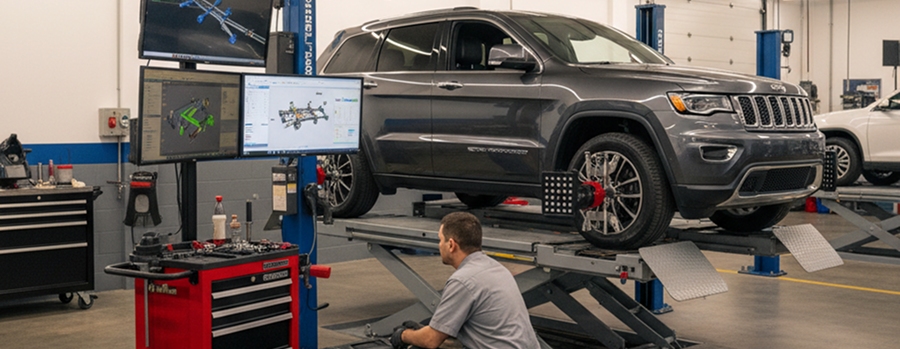
If your
vehicle has recently encountered a rough section of road around Paramus or
Bergen County and you notice changes in steering or tire wear afterward, an
alignment inspection may help identify what's going on.
Vibration Plus Uneven Tire Wear? Look at the
Tires
Your
tires can reveal quite a bit about how your vehicle is operating.
Uneven
tread wear can result from incorrect tire pressure, alignment problems, worn
suspension components, improper rotation, or normal tire wear. A damaged tire
can also contribute to vibration.
Look for
signs such as:
·
Uneven tread
·
Bulges
·
Cracks
·
Irregular wear patterns
·
Visible damage
However,
not every tire problem is easy to spot from the outside.
If your
steering wheel starts vibrating and you notice unusual tire wear at the same
time, have the tires and related components inspected rather than assuming the
problem is simply a matter of tire age.
Steering Wheel Shakes When Braking? Check the
Brakes
A
steering wheel that feels normal while cruising but starts vibrating when you
apply the brakes presents a different clue.
The
braking system operates under significant heat and friction. Issues involving
brake rotors, pads, calipers, or other related components can sometimes produce
vibration when slowing down.
You may
notice the vibration through the steering wheel, along with brake pedal
pulsation, unusual noises, or changes in braking feel.
If your Jeep,
Ram, Dodge, or Chrysler shakes when you brake, don't assume the tires are
necessarily responsible. Having the braking system inspected can help determine
whether the vibration is coming from the brakes.
Vibration Over Bumps? Your Suspension Could
Be Involved
Does the
steering wheel feel fine on smooth pavement but react noticeably when you drive
over bumps or potholes?
That
pattern may point toward the suspension or steering components.
Your
suspension helps keep the tires connected to the road while supporting
handling, stability, and ride comfort. Components such as shocks, struts,
control arms, bushings, and ball joints can wear over time.
Suspension-related
concerns can produce several symptoms beyond vibration, including:
·
Clunking or knocking sounds
·
Uneven tire wear
·
Excessive bouncing
·
Changes in handling
·
A less stable ride
Because
multiple components can create similar symptoms, an inspection is generally
needed to identify the specific source.
Vibration With Loose or Unusual Steering?
Don't Ignore It
A
vibrating steering wheel doesn't automatically mean your steering system is
failing. However, vibration accompanied by noticeable changes in steering
deserves attention.
Worn
steering components can affect how your vehicle responds. Depending on the
model, parts such as tie rods, steering linkage, and other steering-related
components may develop wear.
Pay
attention to symptoms such as excessive steering play, clicking or knocking
noises, difficulty maintaining a straight path, or changes in steering
response.
If the
steering wheel feels different in more than one way, having the steering and
suspension systems inspected can help identify the underlying issue.
Started After a Pothole? Check the Wheel
Sometimes
the timing tells you almost everything you need to know about where to start
looking.
If your
steering wheel began vibrating immediately after hitting a pothole or curb, the
tire and wheel assembly deserves attention.
A strong
impact can potentially damage a tire or bend a wheel. The damage may not always
be obvious while the vehicle is parked, but it can affect how the wheel rotates
and create vibration at speed.
If
you've recently hit a significant road hazard in the Paramus area,
mention the impact when you bring your vehicle in for service. That information
can help direct the inspection.
When Is Steering Wheel Vibration a Bigger
Concern?
A mild
vibration can be tempting to ignore when your vehicle otherwise seems to drive
normally. But a persistent or worsening vibration shouldn't simply become
something you get used to.
Have
your vehicle checked if the vibration is accompanied by:
·
Uneven or rapidly increasing tire wear
·
Pulling to one side
·
Steering wheel looseness or excessive movement
·
Clicking, clunking, or grinding
·
Increasing vibration at higher speeds
·
Vibration during braking
·
Changes in handling or braking
·
A recent pothole or curb impact
If the
vibration suddenly becomes severe or you notice a major change in steering or
braking, avoid unnecessary driving until the vehicle can be inspected.
Keeping Your Vehicle's Steering Feel
Consistent
Regular
maintenance can help catch some potential causes of vibration before they
develop into larger problems.
Keep
your tires inflated according to the manufacturer's recommended pressure,
follow the appropriate tire rotation schedule, and pay attention to unusual
tread wear.
It's
also important to address alignment concerns when you notice symptoms such as
pulling or an off-center steering wheel.
After a
significant pothole or curb impact, don't assume everything is fine simply
because there isn't visible damage. Tires, wheels, alignment, and suspension
components can all be affected.
Your
owner's manual provides model-specific recommendations for tire pressure and
maintenance. Following those guidelines can help keep your vehicle's tires,
wheels, and related systems operating as intended.
Get Your Steering Wheel Vibration Checked at
Paramus CDJR
A
steering wheel vibration can provide an important clue about what's happening
with your vehicle. The speed, road conditions, braking, acceleration, and other
circumstances surrounding the vibration can all help narrow down the
possibilities.
Tire and
wheel problems, alignment, brakes, suspension, steering components, and road
damage can all contribute to an unusual steering feel.
If your
Jeep, Ram, Dodge, or Chrysler is vibrating while driving around Paramus,
Ridgewood, Fair Lawn, or the surrounding Bergen County area, Paramus CDJR can
inspect your vehicle and help identify the possible cause.
Don't ignore a steering wheel that suddenly feels different. Schedule service at Paramus CDJR and have your vehicle checked.
